Necrohaphe Series
2024 – 2025
Medium:
Spatial installation created within the Museum of Ancient Glass in Zadar, composed of an immersive black-curtained environment and a constellation of works developed in dialogue with the museum’s archival collection related to death and Roman funerary ritual.
Artworks in the series:
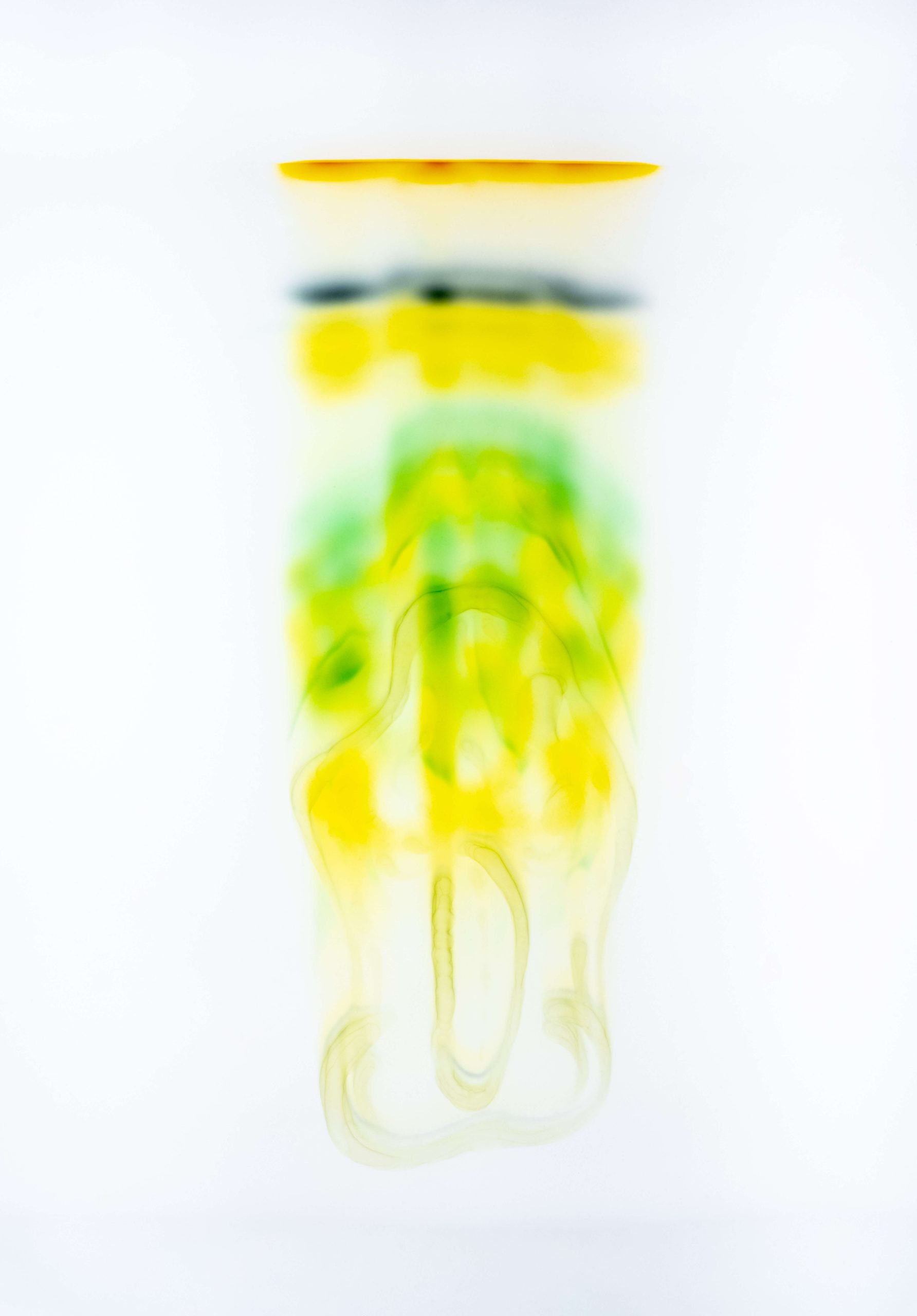
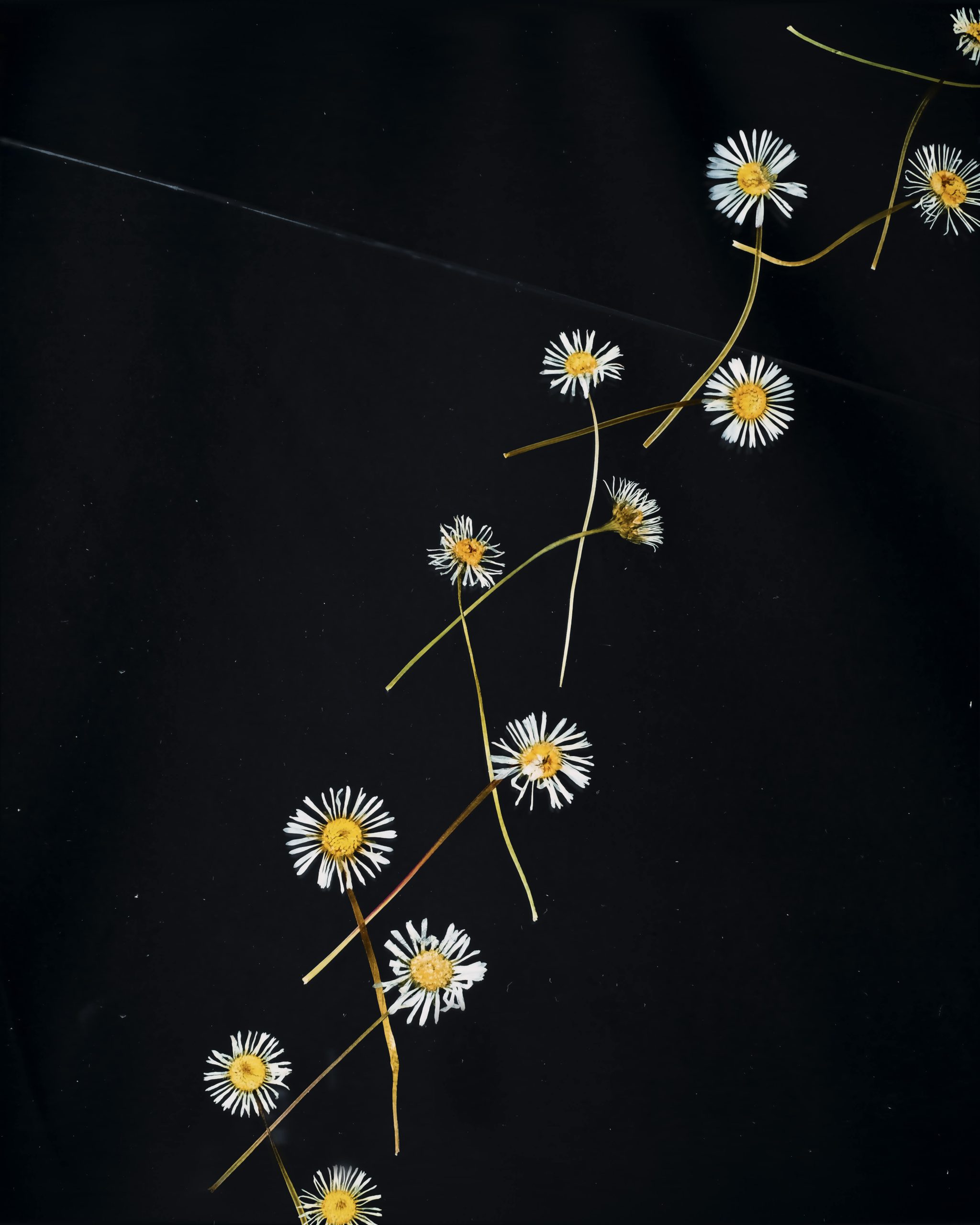
Chromatic Charms Series / Lucky Me (A10383), 2024 – 2025
Digital print of a chromatographic plate with daisy-flower extract on Hahnemühle Photo Rag 308 g/m² paper, mounted on 2 mm cardboard
99 × 69 cm
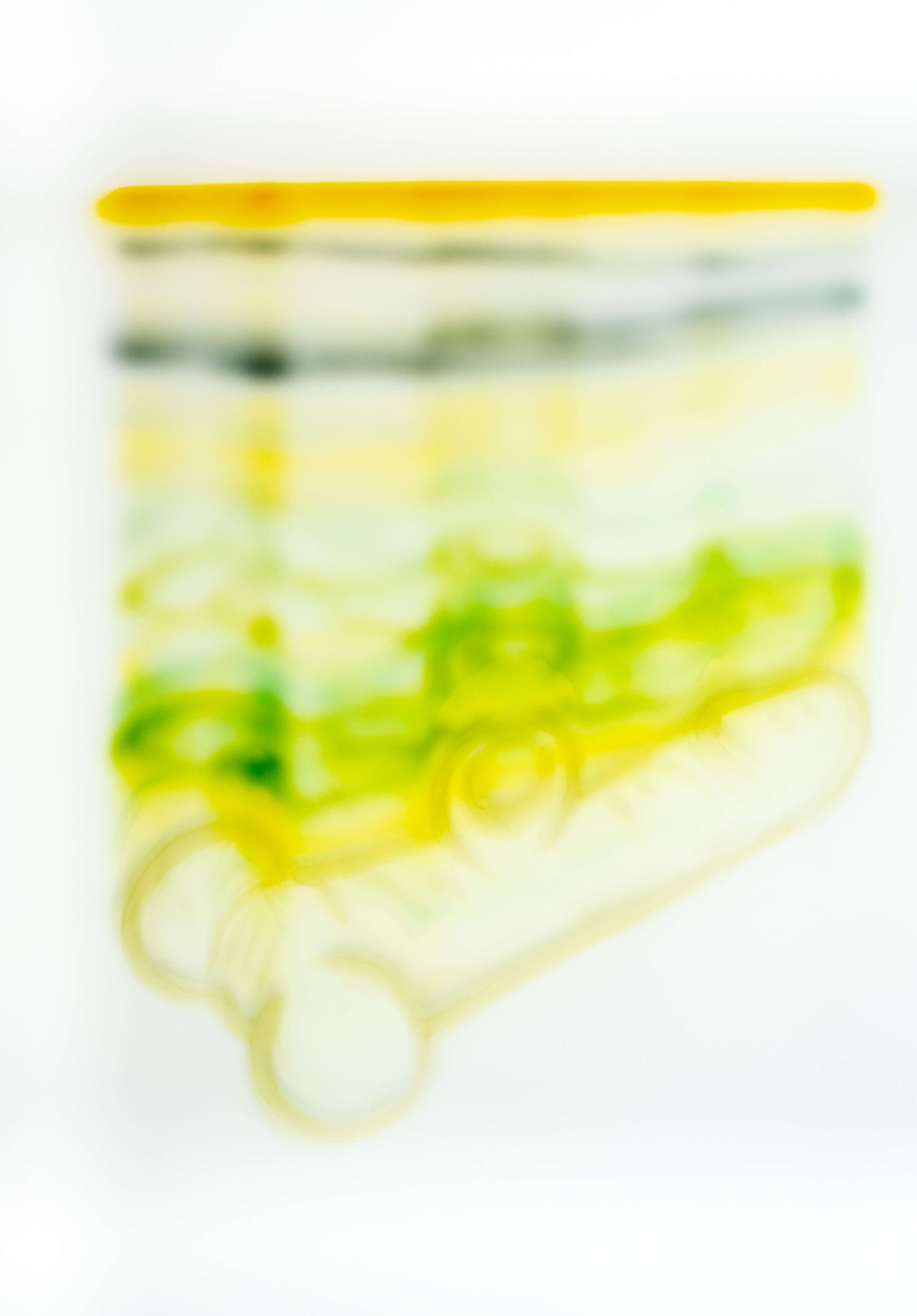
Chromatic Charms Series / Lucky Me (A7980), 2024 – 2025
Digital print of a chromatographic plate with daisy-flower extract on Hahnemühle Photo Rag 308 g/m² paper, mounted on 2 mm cardboard
99 × 69 cm
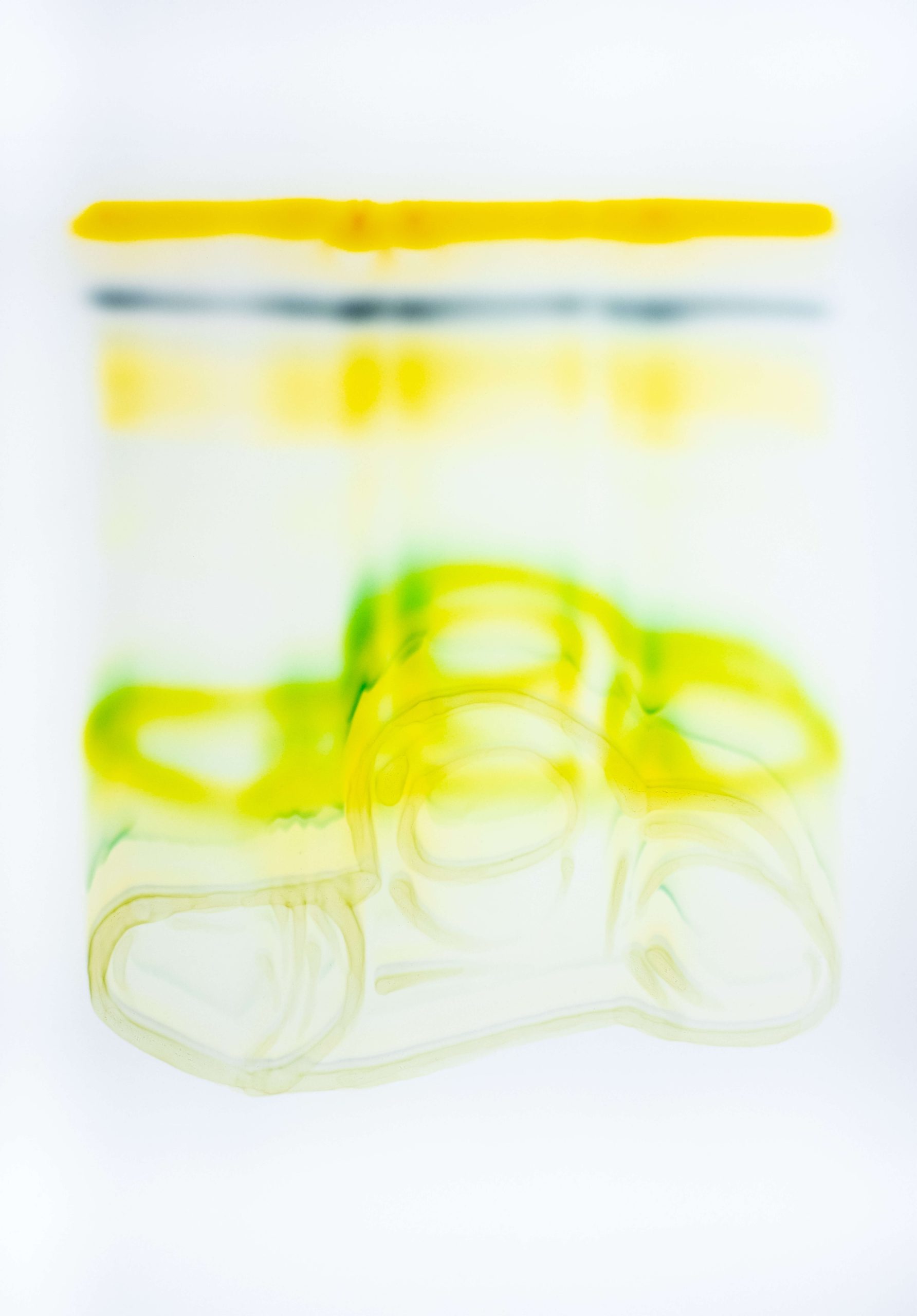
Chromatic Charms Series / Lucky Me (A11046), 2024 – 2025
Digital print of a chromatographic plate with daisy-flower extract on Hahnemühle Photo Rag 308 g/m² paper, mounted on 2 mm cardboard
99 × 69 cm
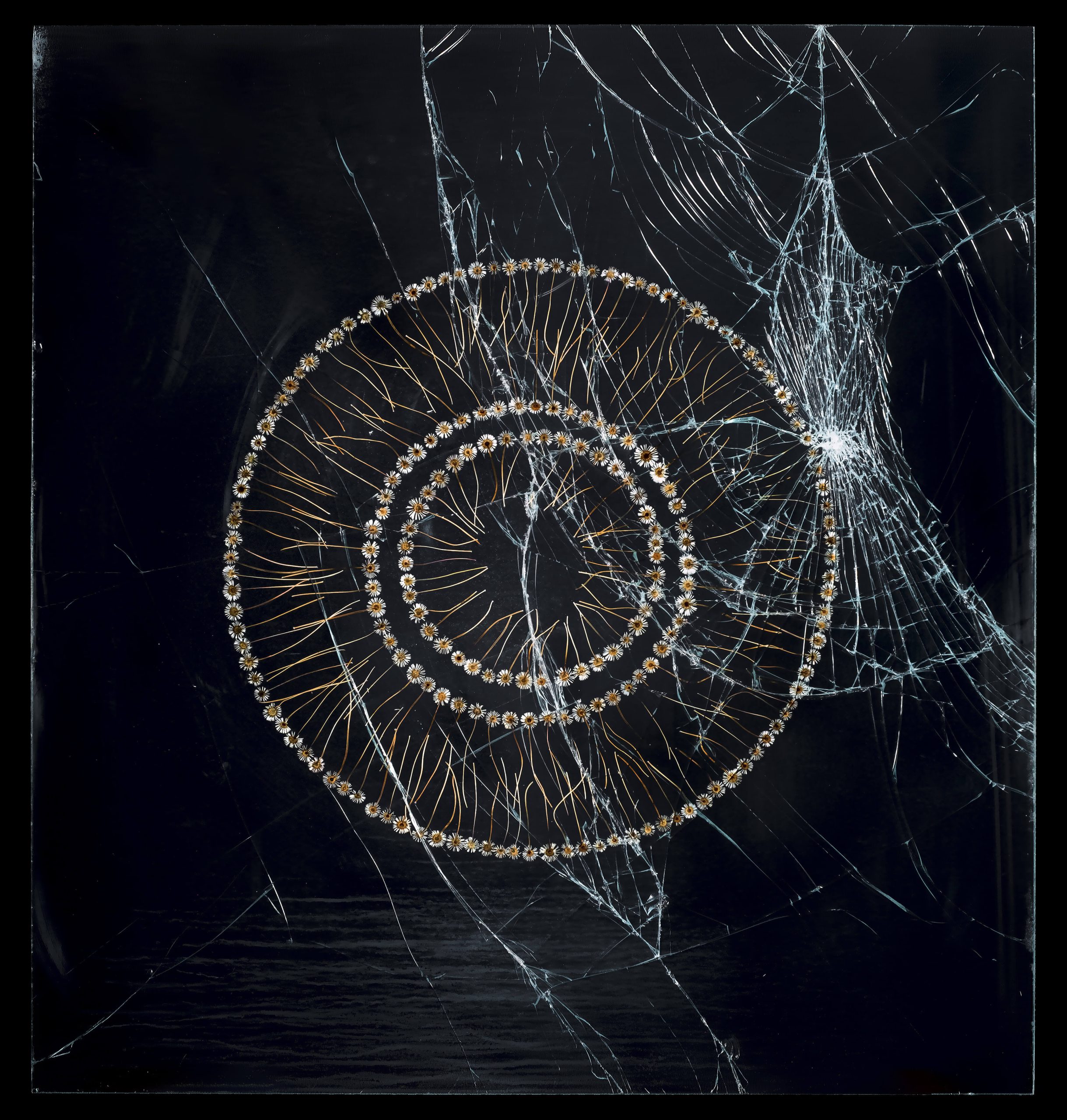
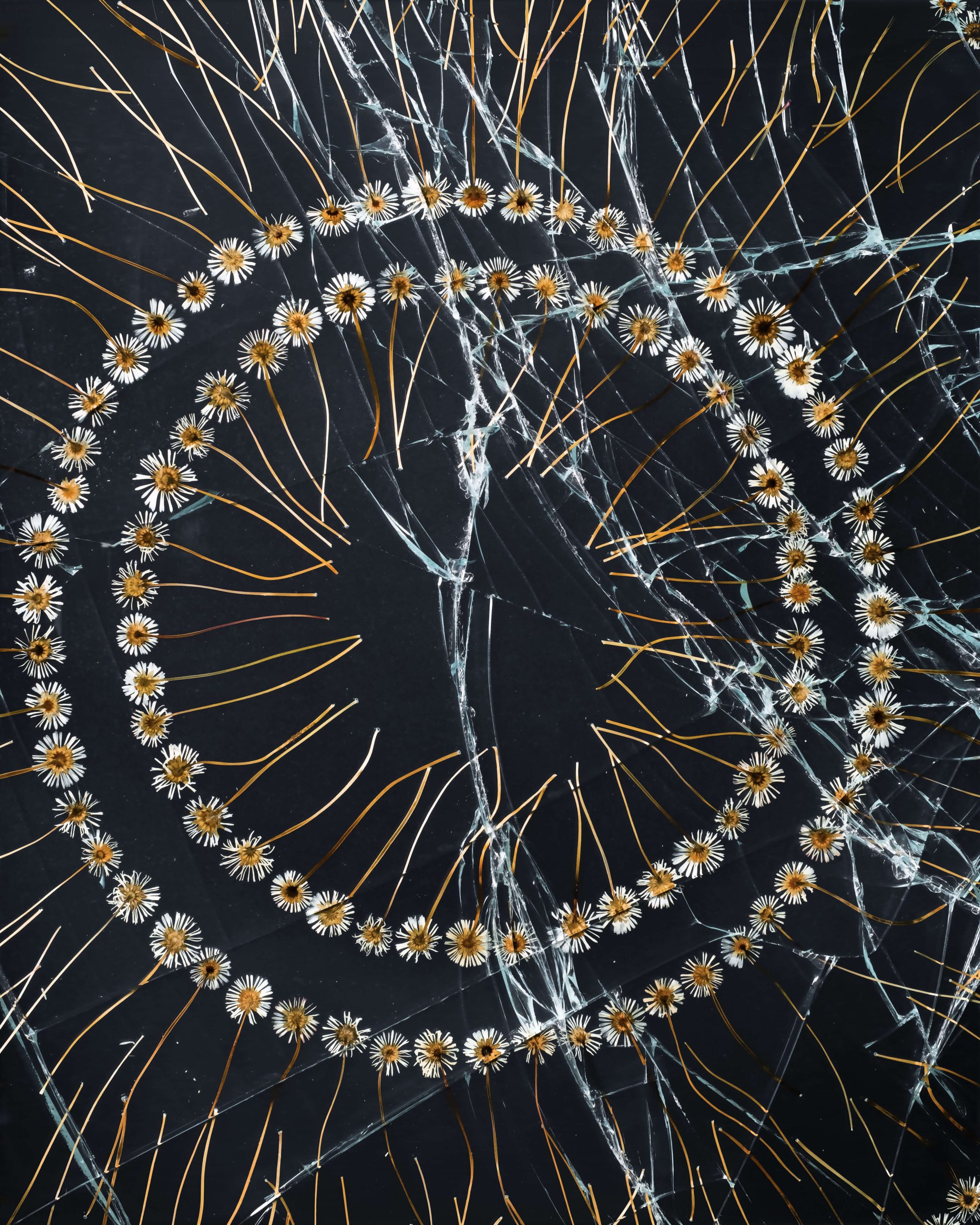
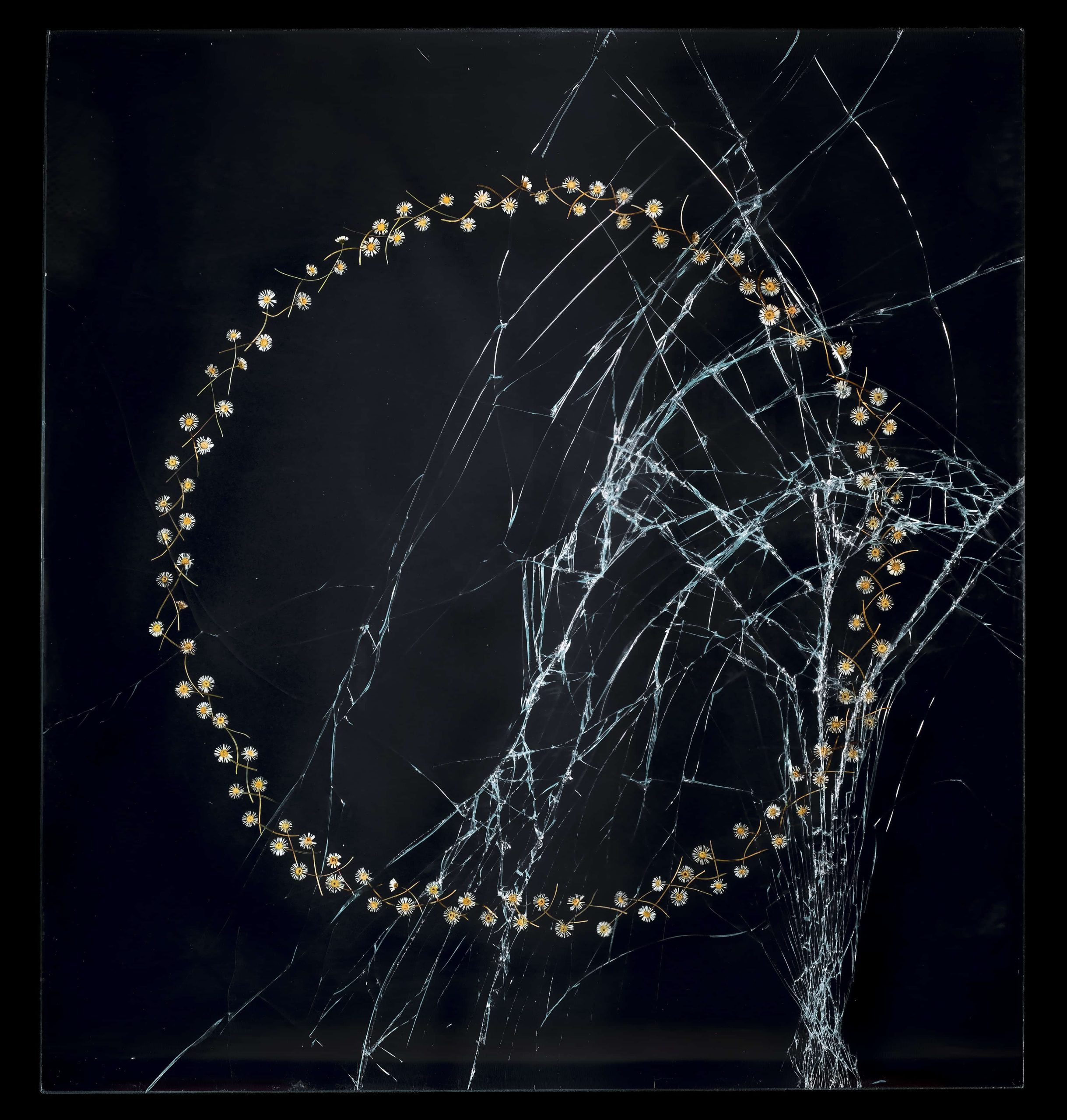
Daisy Chain Series / Fucking Innocence, 2017 – 2025
Laminated glass, daisy flowers (Bellis perennis) 126 × 116.6 × 1 cm
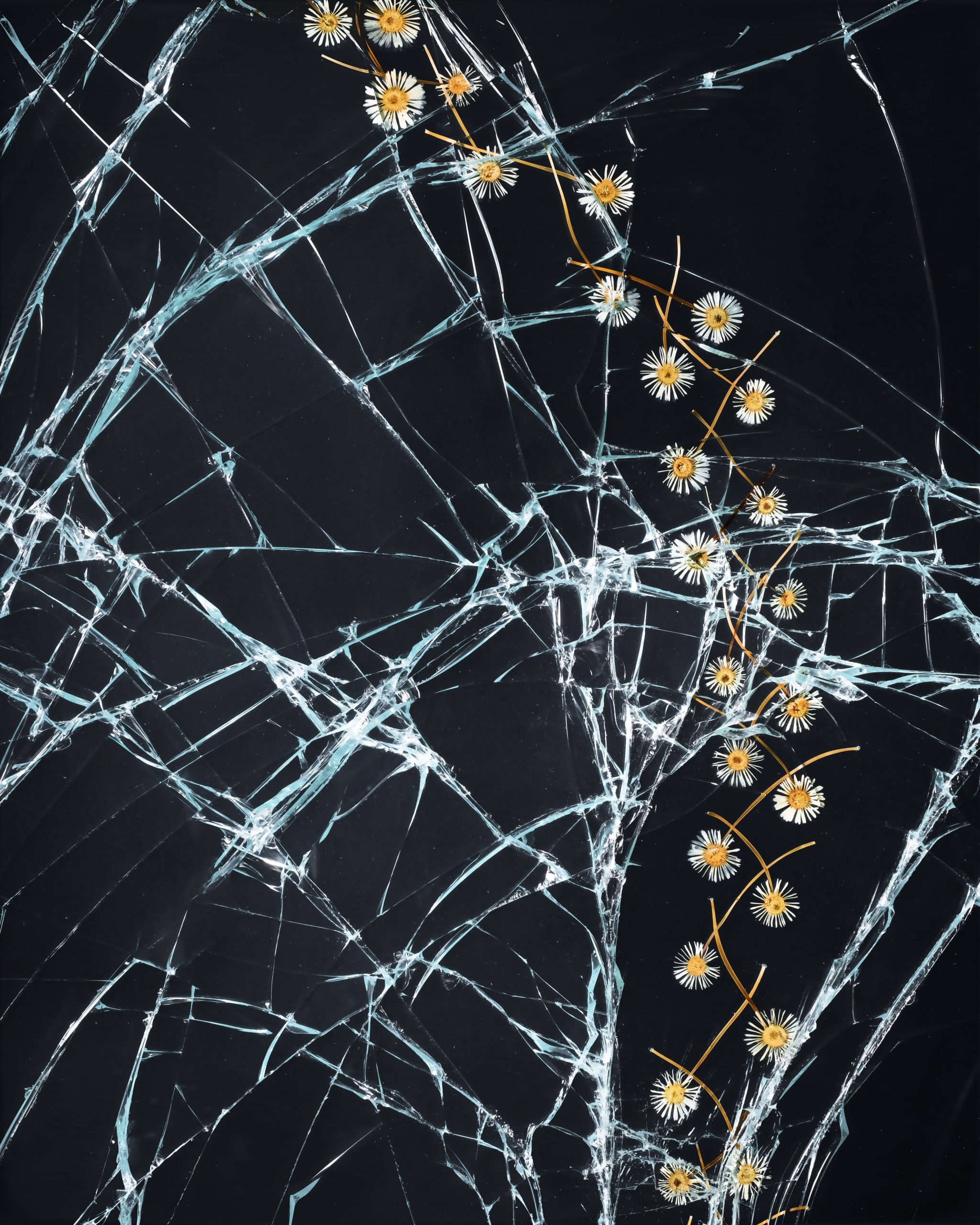
Daisy Chain Series / Broken Innocence, 2017 – 2025
Laminated glass, daisy flowers (Bellis perennis) 126 × 116.6 × 1 cm
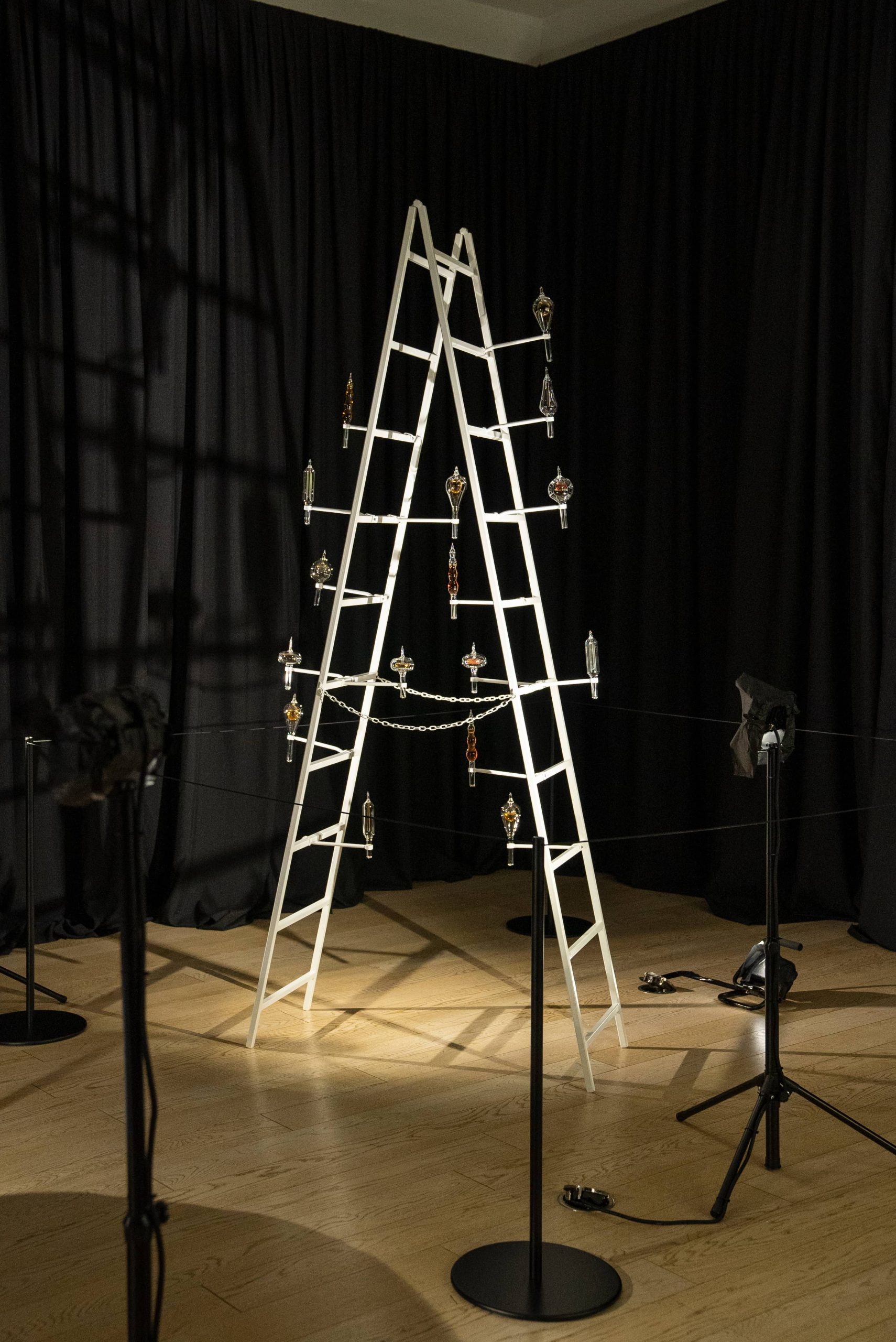
The Garden, 2015
Metal construction, borosilicate-glass vessels with plant extracts 245 × 50 × 110 cm
Deadly Quiet / Self-Portrait as Harpocrates, 2024 – 2025
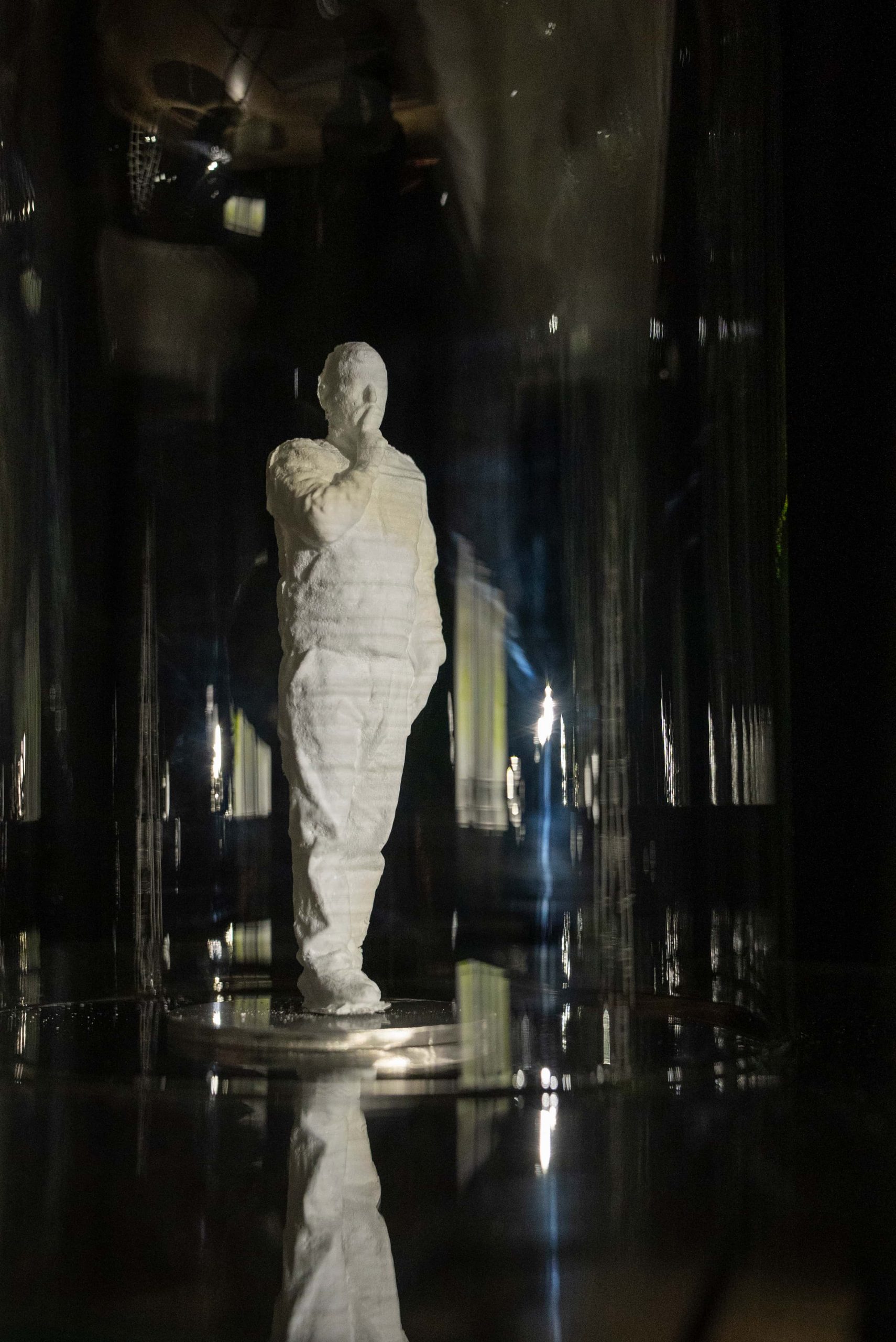
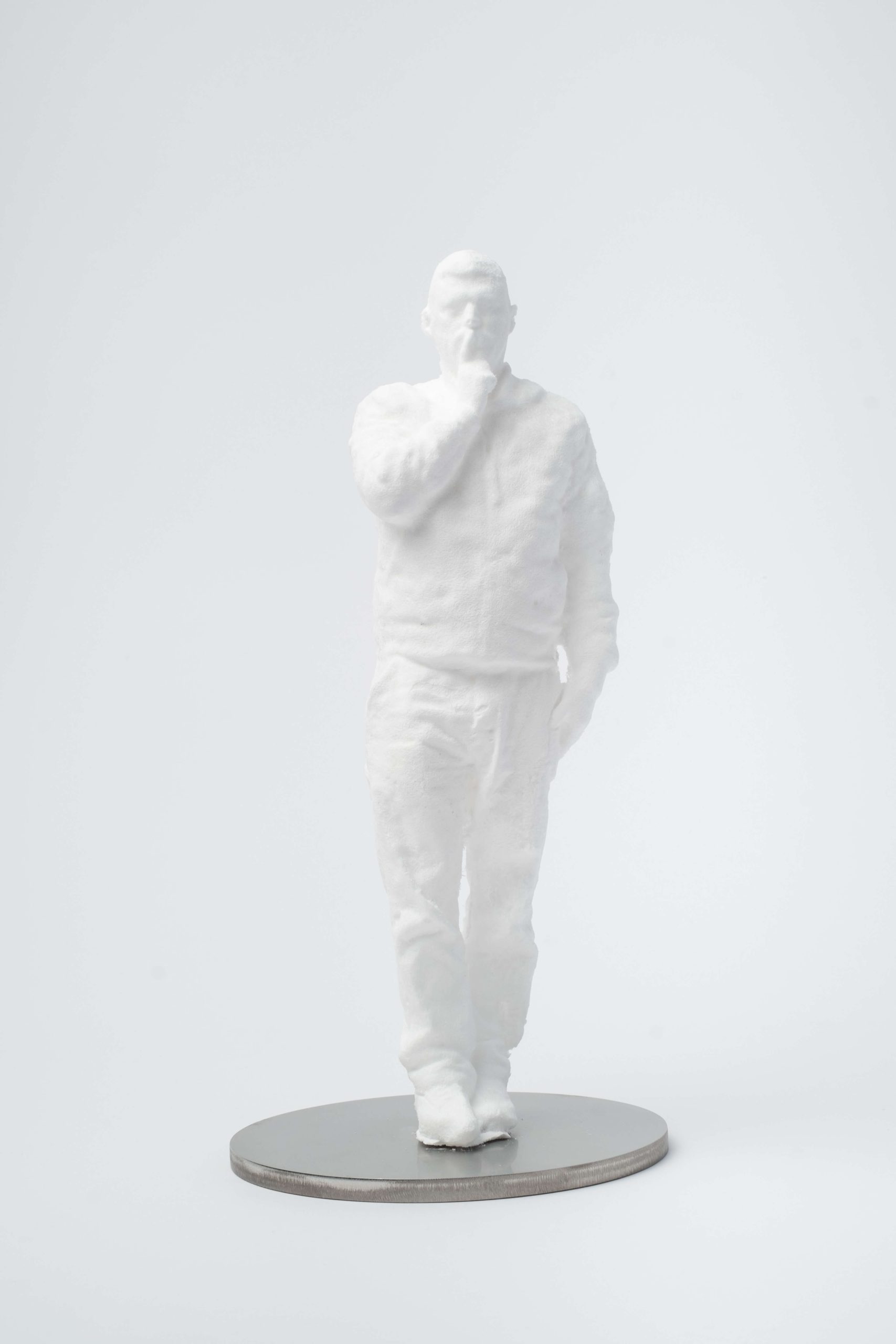
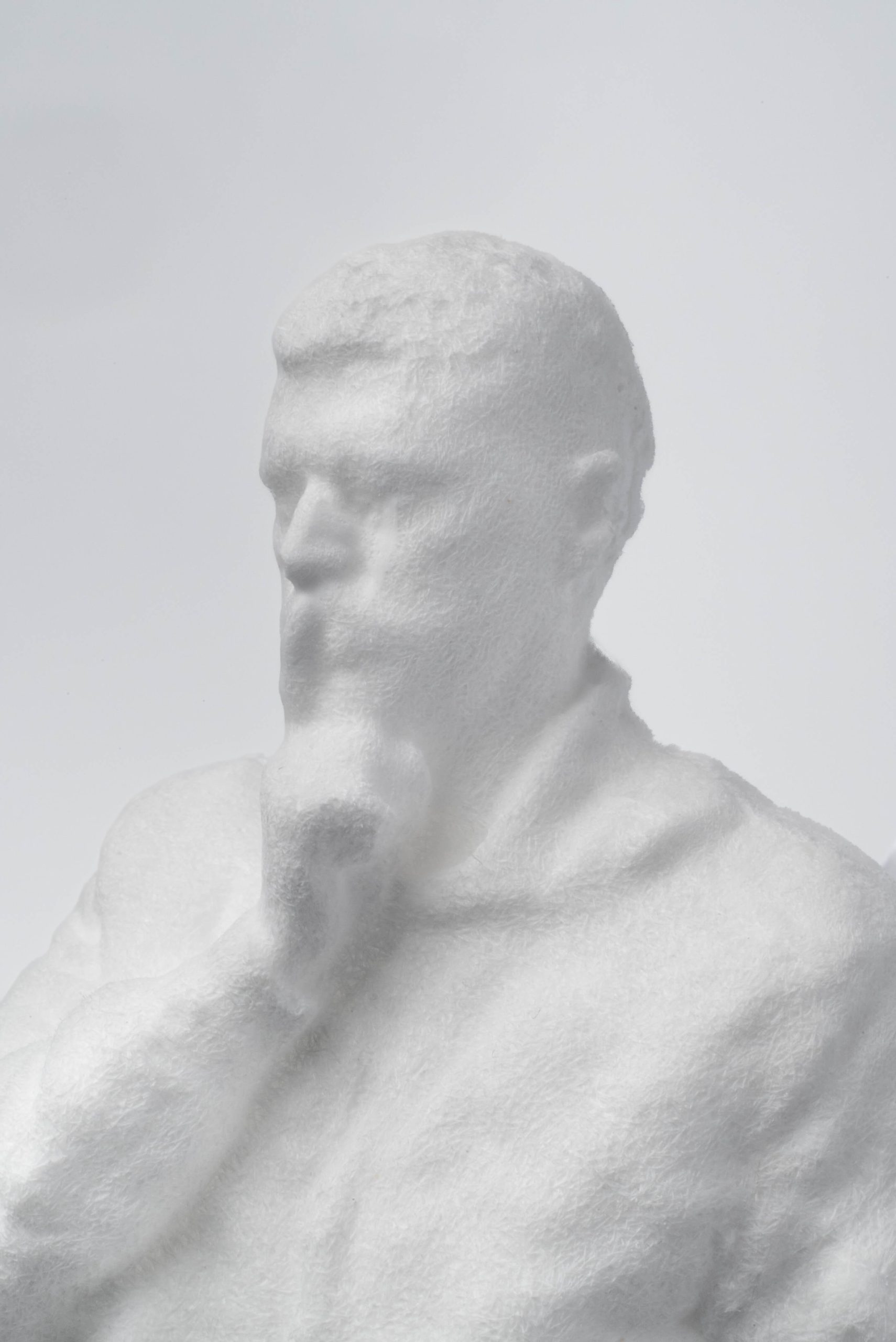
Crystallized caffeine, stainless-steel base 20 × 7 × 4 cm (base 20 × 10 × 10 cm)
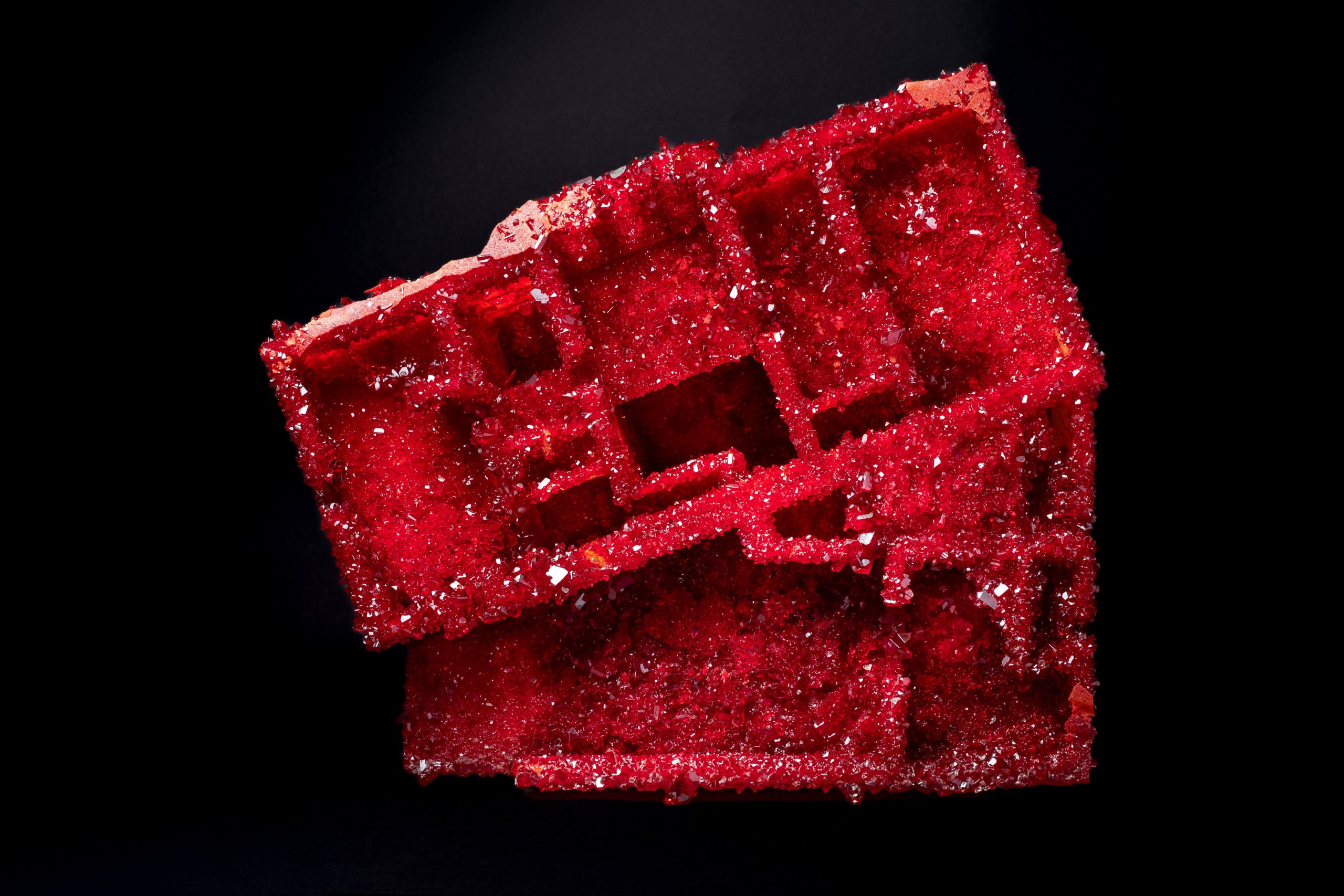
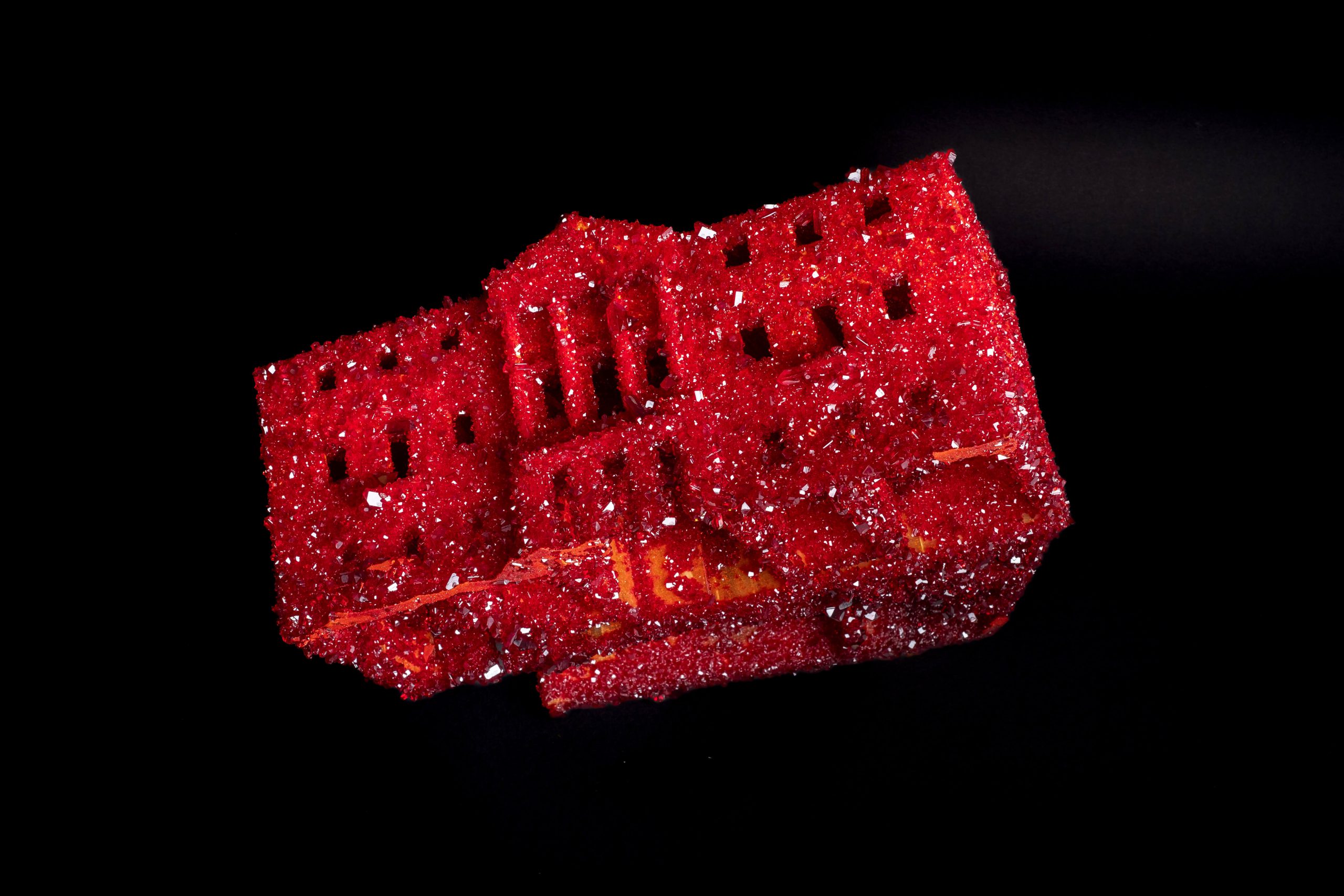
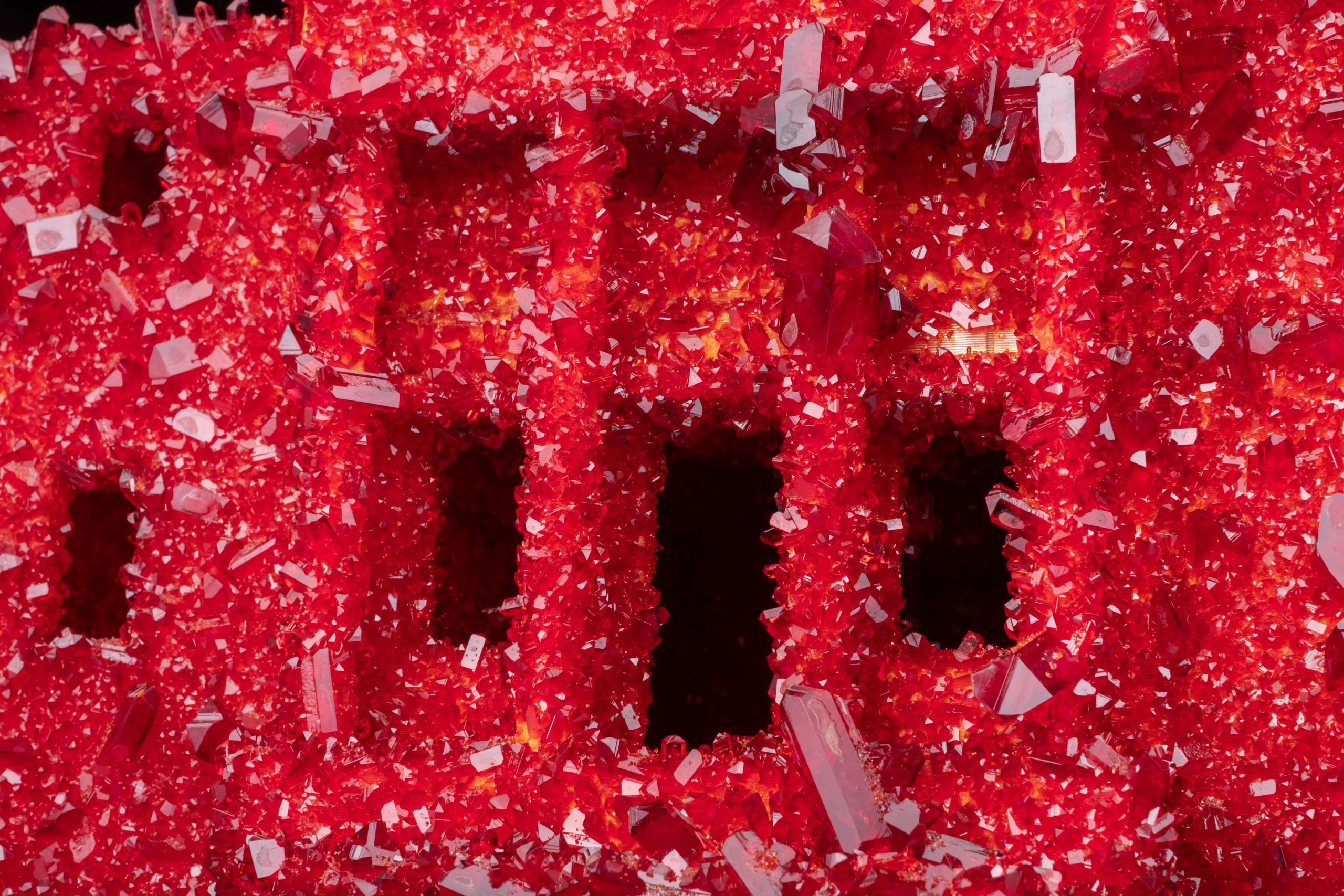
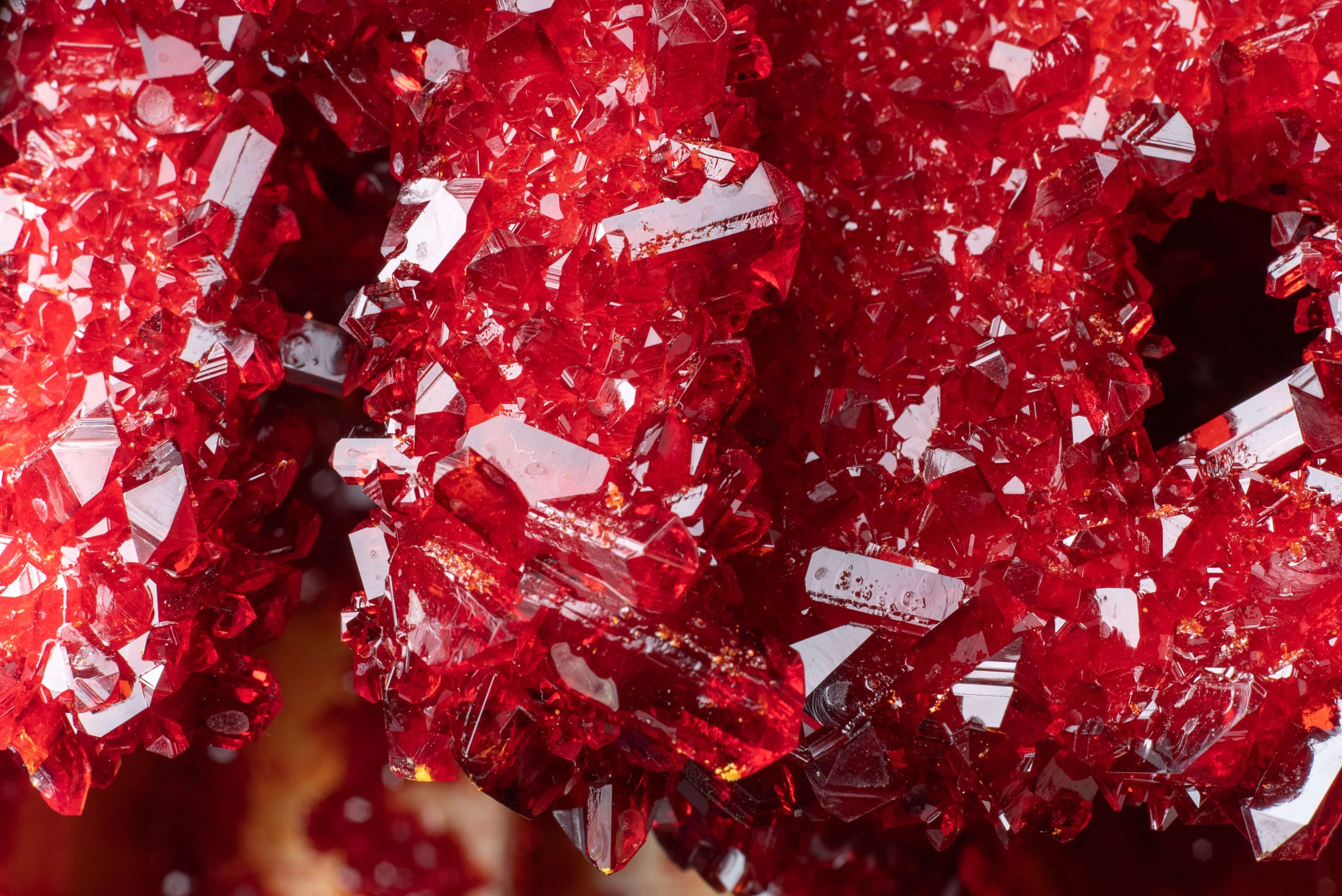
The Collector, 2024 – 2025
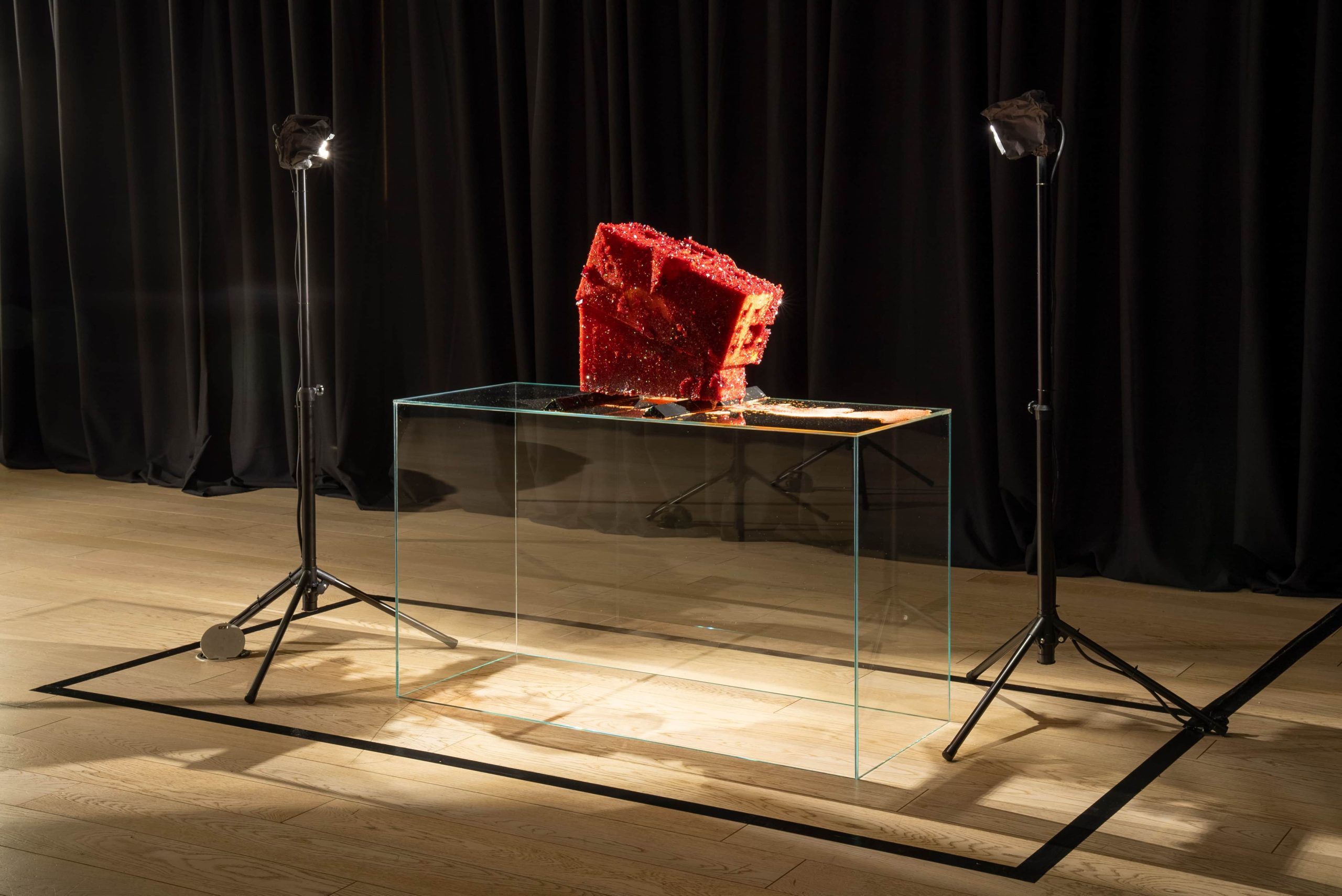
Transparent PLA filament, crystallized potassium hexacyanoferrate (III) 42 × 38 × 19 cm
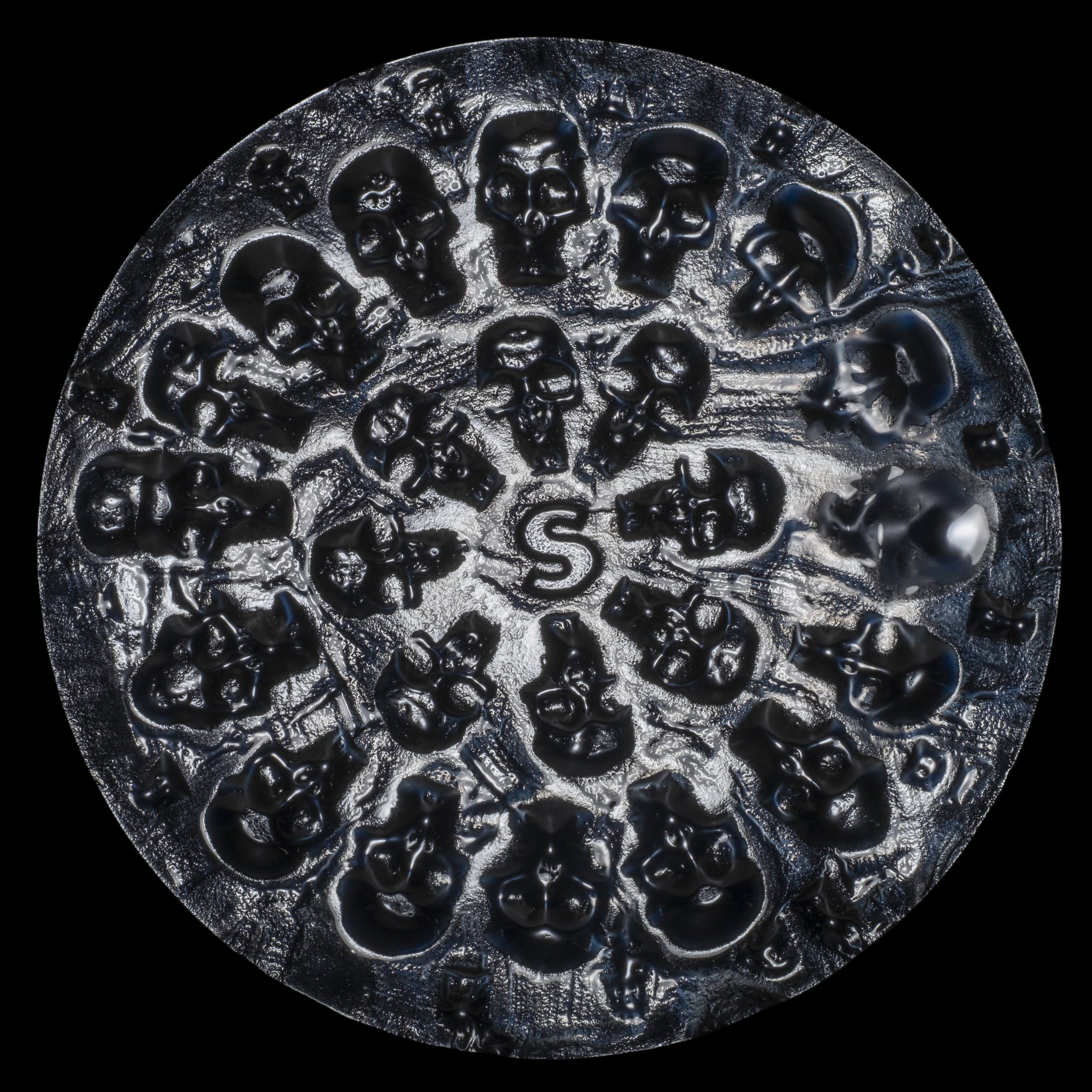
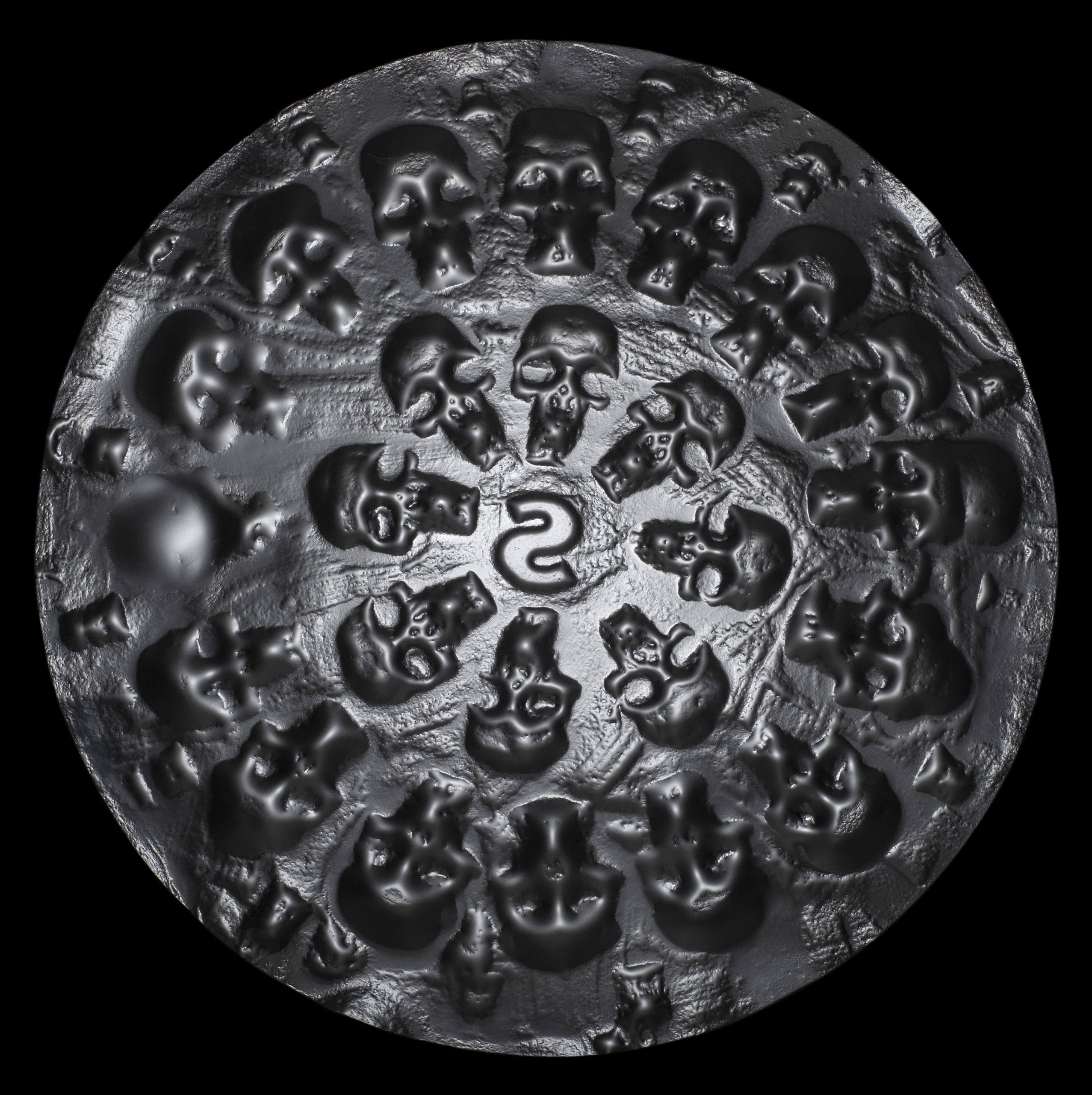
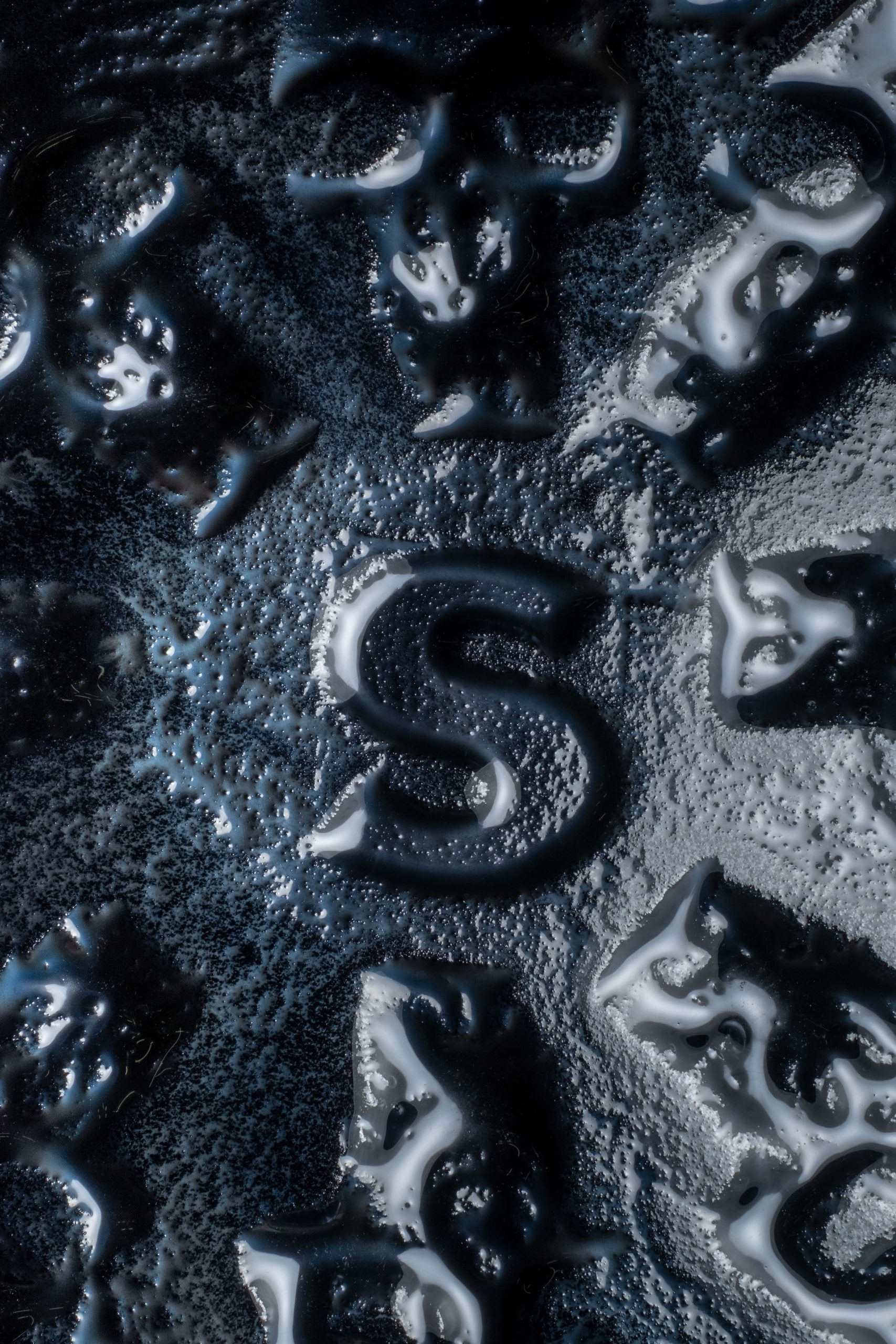
Somnus, 2024 – 2025
Embossed galena-coated glass Ø 115 cm
Museum of Ancient Glass, Zadar, Croatia, 2025
Work Description:
Necrohaphe transforms the Museum of Ancient Glass into a space of contemporary ritual, where scientific experimentation, archaeology, and mythology converge. The installation creates a dialogue between newly produced works and ancient Roman funerary artifacts—vessels once believed to contain tears, ashes, or remnants of the soul.
Through processes of chromatography, crystallization, and botanical extraction, Vujičić reinterprets the material culture of antiquity, translating its rituals of death into a poetic and chemical language. The exhibition’s black-draped environment stages a symbolic descent into an “underground glass garden,” where organic and mineral substances mutate, merge, and solidify into new relics of transformation.
In the Chromatic Charms Series, extracts of daisies are used to reproduce the contours of Roman phallic pendants—amulets of fertility and protection—on chromatographic plates. These fragile prints, whose colors soon fade, link erotic vitality with mortality and the fleeting nature of the image itself. The Daisy Chain Series continues this exploration of duality, embedding flowers associated with innocence between sheets of shattered glass, exposing the tension between purity and transgression, desire and decay.
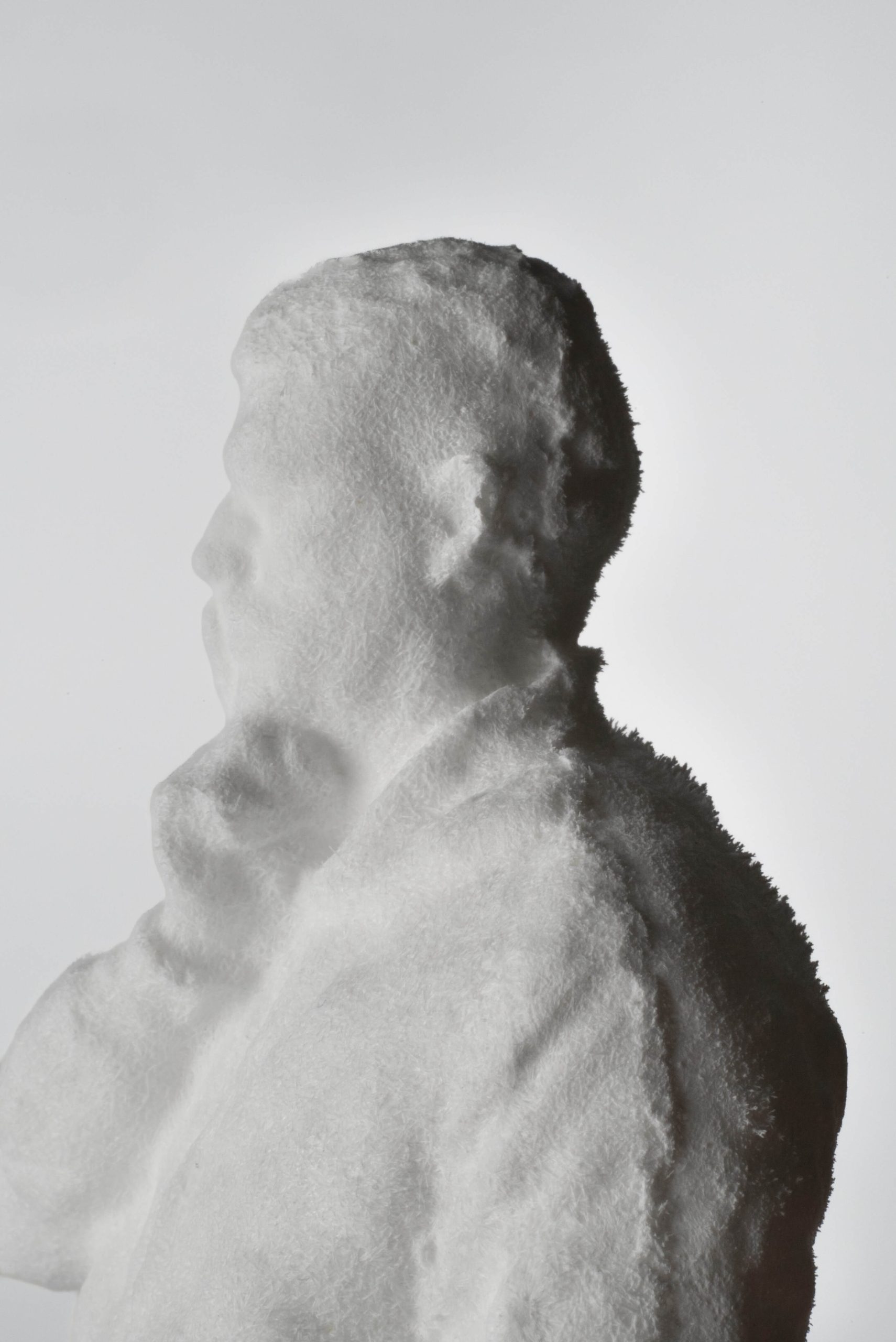
Sculptures such as The Collector, a crystallized 3-D model of the museum, and Deadly Quiet / Self-Portrait as Harpocrates, cast in crystallized caffeine, embody the paradox of preservation and peril—objects that shimmer with beauty while holding toxicity within. Somnus, a galena-coated glass disc inscribed with skulls, evokes the Roman god of sleep and eternal rest, while The Garden encloses poisonous plant extracts within fragile borosilicate vessels, echoing both laboratory precision and funerary containment.
Across the installation, Vujičić fuses the alchemy of matter with the archaeology of belief. His materials—glass, flowers, minerals, and chemical compounds—oscillate between vitality and stasis, life and its suspension. In this contemporary necropolis of light and transparency, the artist stages a meditation on the aesthetics of death, memory, and transformation, where every crystallized form, fading print, and preserved bloom becomes both memento and resurrection.
Photo credits:
Ivan Slipčević